
2100°C working · 2200°C design
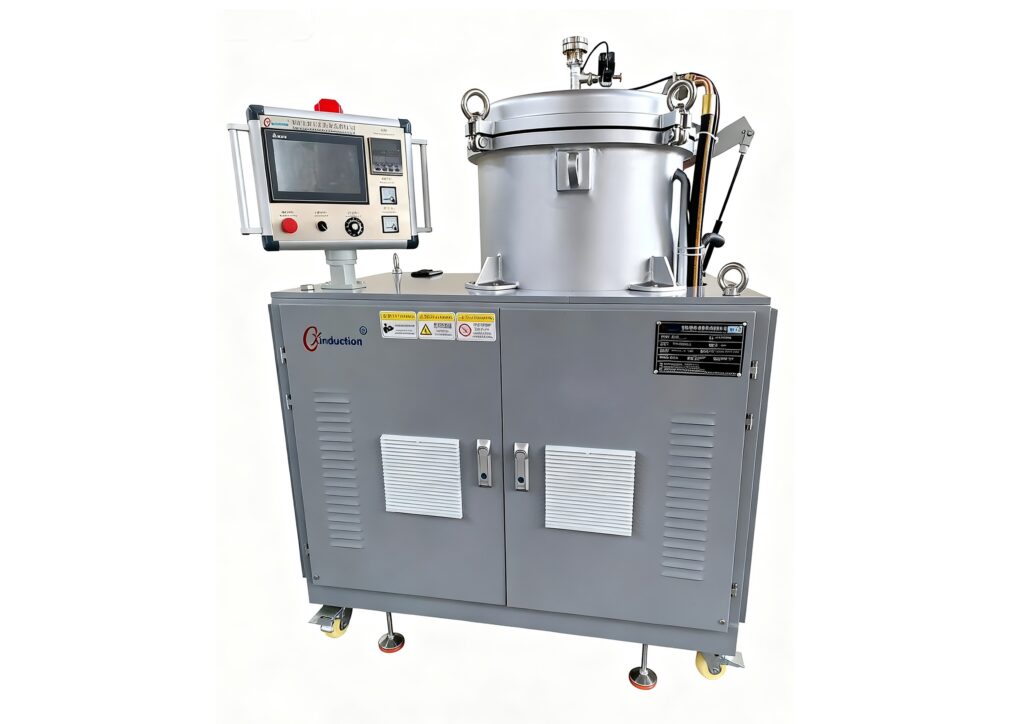
Top-loading laboratory carbonization furnace with graphite resistance heating.
Share your material, batch size and target temperature.
The CX-CF-Lab vertical, top-loading furnace uses graphite resistance heating for carbon-material research. The graphite hot zone supports compatible carbonization and heat-treatment work under vacuum or inert gas, subject to the material and process requirements.
Review the model data below against your sample size and process. Send your requirements to CXinduction →
Provide the starting material, sample-holder dimensions, batch load, heating profile and atmosphere. State the working temperature and dwell time separately from the maximum design temperature. Discuss expected process vapours and gas handling before choosing a configuration.
| Model | CX-CF20/30VR |
|---|---|
| Working temperature | 2100°C |
| Maximum design temperature | 2200°C |
| Heating method | Graphite resistance |
| Work zone | Φ200 × H300 mm |
| Listed loading capacity | 10 L |
| Temperature uniformity | ±10°C, measured at 1600°C |
| Maximum heating rate | 15°C/min |
| Rated power | 40 kW |
| Working atmosphere | Vacuum / inert gas |
| Power supply | Three-phase; customizable |
| Cooling water pressure | 1.5–2.5 bar |
| Cooling water flow | 10 m³/h |
Confirm the usable loading space, atmosphere configuration and utility requirements for your material and process before ordering.
The listed working temperature is 2100°C. The maximum design temperature is 2200°C; these are separate specifications. Share your temperature profile for technical review.
Vacuum and inert-gas configurations are listed. The suitable gas, vacuum level and operating conditions must be confirmed for your material and process.
Send your company or laboratory, material, sample dimensions, batch load, target temperature, atmosphere requirements and installation location. Include cooling-water and power-supply requirements.
Please include your company or laboratory, material, sample dimensions or batch size, target temperature, vacuum or inert-gas requirements, and installation location. These details help us assess the configuration and prepare a relevant quotation.
© 2026 All Rights Reserved.