The bottom-discharge ultra-high temperature graphitization furnace achieves continuous and efficient material processing through its bottom-discharge design, combined with ultra-high temperature (above 2500°C) graphitization technology, providing key high-purity graphite materials for non-aerospace industries such as semiconductors, metallurgy, and new energy. This furnace ensures uniform temperature distribution, significantly enhancing graphite crystallinity and purity, meeting industrial demands for thermal stability, conductivity, and corrosion resistance. In semiconductor manufacturing, high-purity graphite components like wafer carriers and heaters enable precise temperature control, ensuring chip production accuracy and yield. In metallurgy, its produced graphite electrodes for electric arc furnace steelmaking greatly improve smelting efficiency and reduce energy consumption. Simultaneously, this furnace drives the upgrade of the new energy industry chain, supplying core graphite materials for lithium battery anodes and photovoltaic equipment, supporting the large-scale application of clean energy technologies.
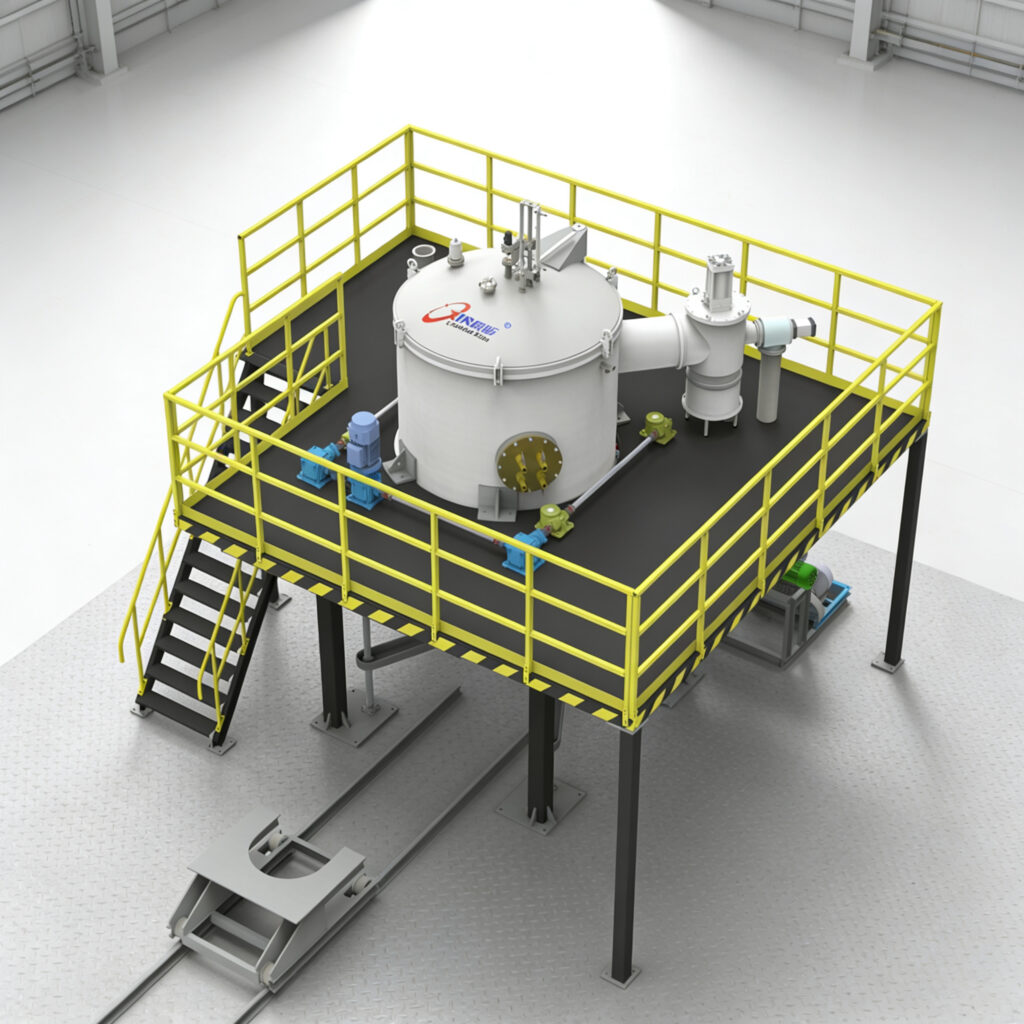
In the chemical and energy sectors, the application of bottom-discharge ultra-high temperature graphitization furnaces is particularly prominent. In the chemical industry,
the high-purity graphite products they produce are used as reactor linings, seals, and electrodes, effectively resisting strong acid and alkali corrosion, extending equipment lifespan, and enhancing safety. In the hydrogen energy industry, graphite composite materials manufactured by these furnaces are utilized in hydrogen storage containers and fuel cell components, improving storage and transportation efficiency as well as durability. Additionally, in automotive manufacturing, graphite-based brake pads and bearings rely on the high-performance materials produced by these furnaces, achieving dual optimization of lightweight design and braking performance. These applications not only reduce manufacturing costs but also significantly enhance product reliability and service life under extreme operating conditions, laying the foundation for sustainable industry development.
With the global industry transitioning toward intelligence and sustainability, the technology of bottom-discharge ultra-high temperature graphitization furnaces is accelerating its iteration and upgrade. By integrating AI control and precise atmosphere management systems, the furnace enables mass production of higher-purity graphite, expanding into emerging fields such as carbon fiber-reinforced composites and high-end electrode materials. In the future, this technology will deeply contribute to carbon neutrality goals, for instance, by optimizing graphite moderator performance in nuclear energy or developing graphene-based thermal components for electronic devices, further driving cost reduction and efficiency gains across multiple industries. This not only reinforces the core role of graphite materials in modern industry but also provides efficient and economical material solutions for the low-carbon transformation of global manufacturing。